The problem
Most clinic software in the region is translated, not written, for Arabic. Screens flip half-way, dates and numbers fight the text, and the dental chart (the screen a dentist uses all day) is a picture you can't really work on. Clinics end up keeping paper files next to the software.
What I built
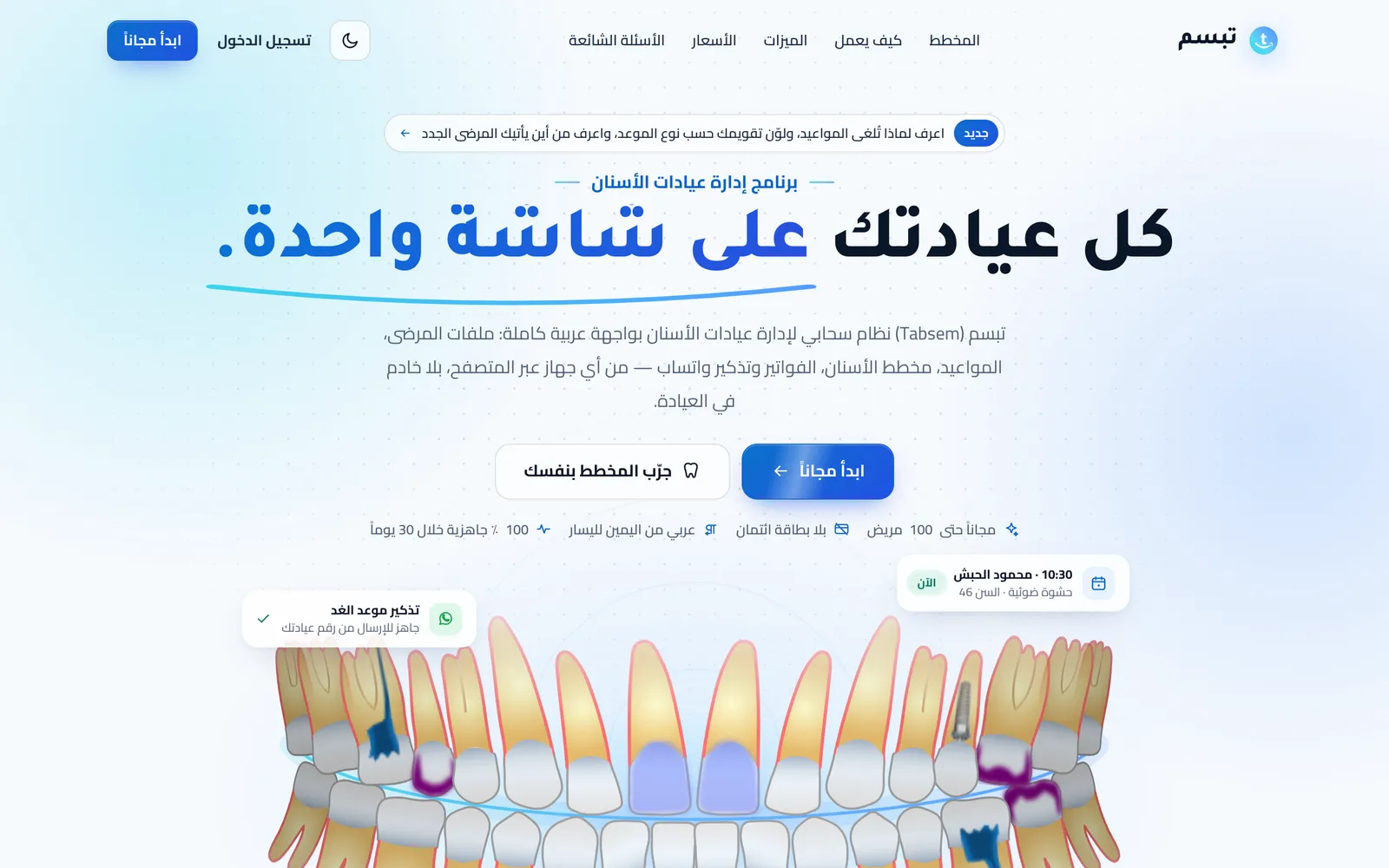
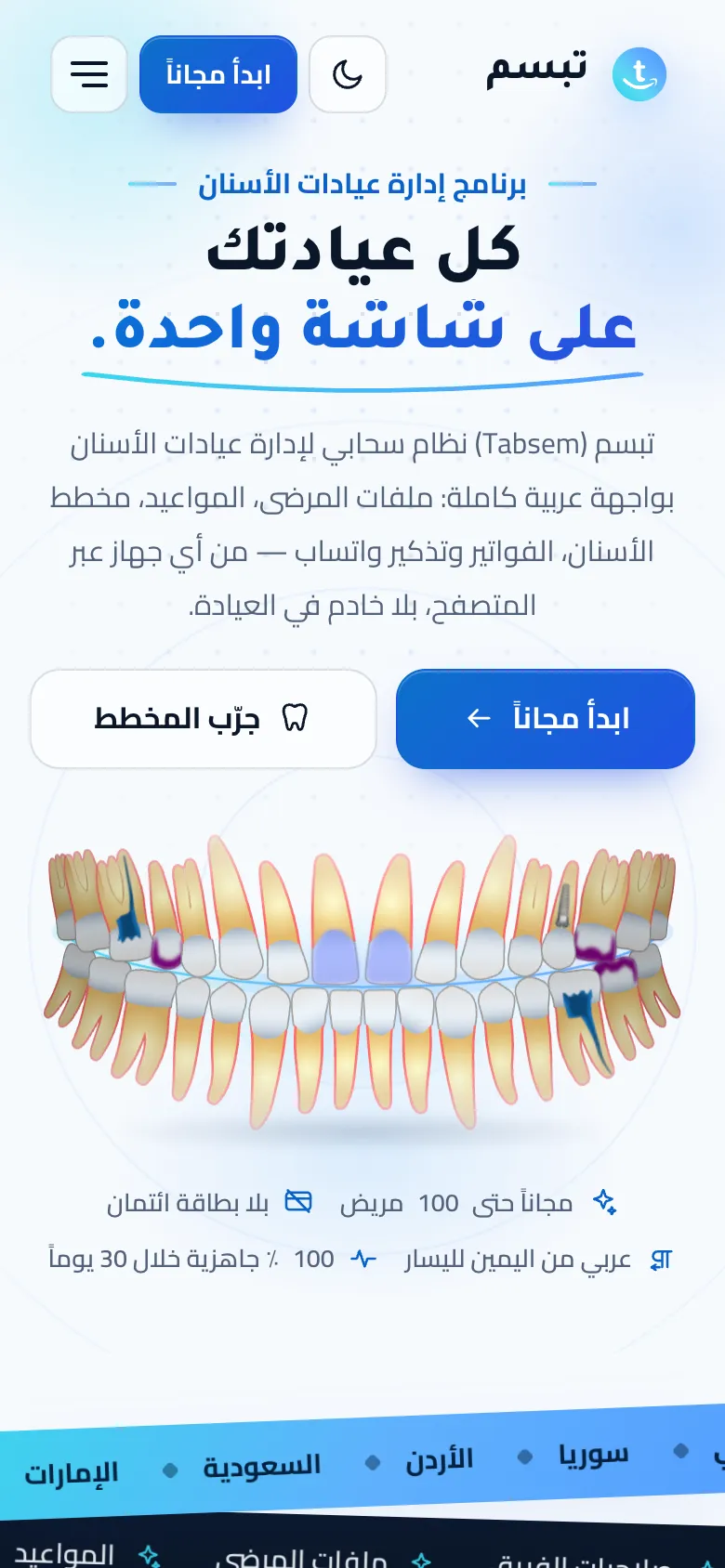
Tabsem is a clinic system designed in Arabic from the first screen. Everything a dental clinic runs on lives in one place:
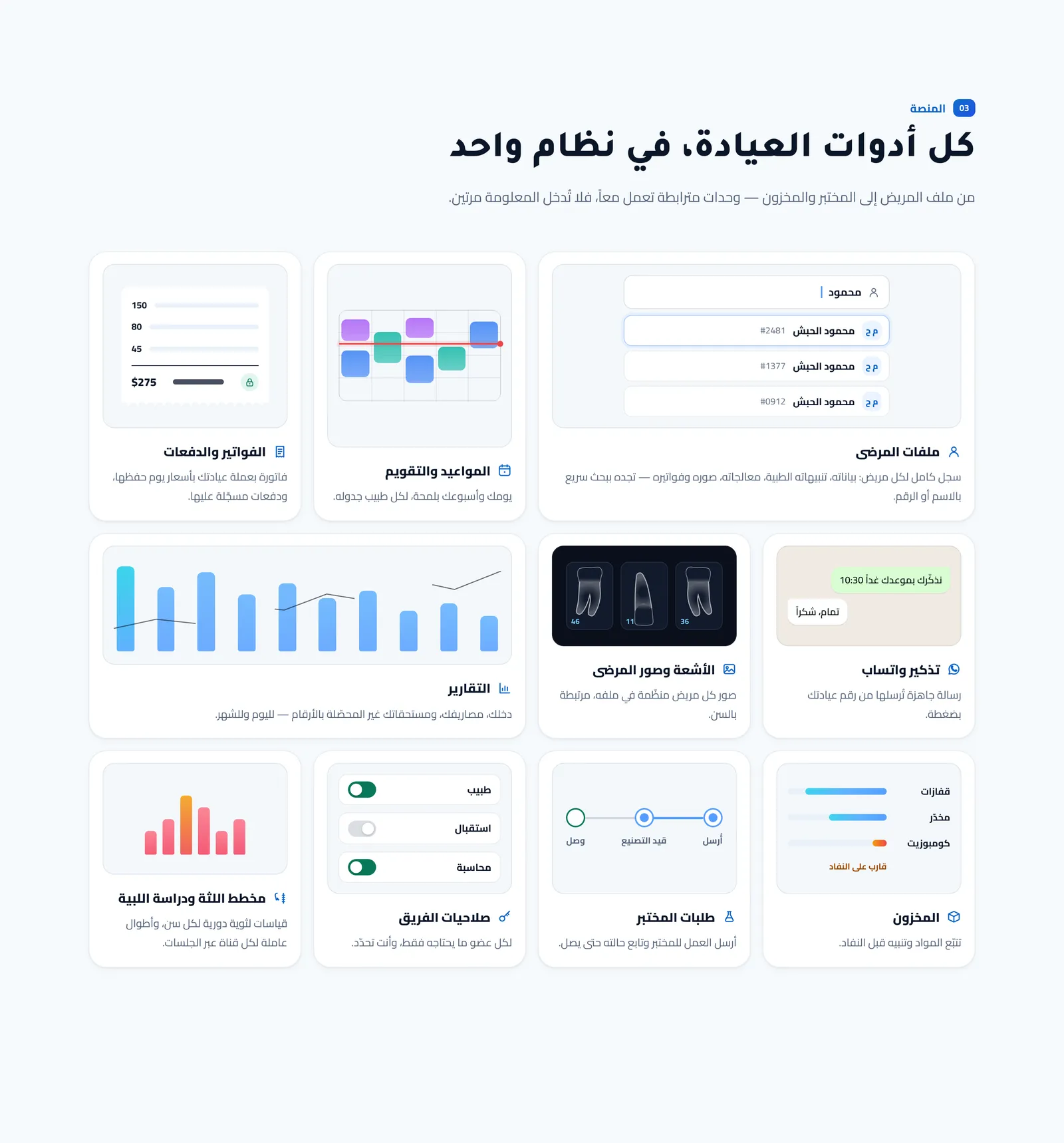
- Patient files with medical alerts, history, photos and X-rays, found in a second by name or number.
- Appointments by day and week, coloured by type, with the reason a visit was cancelled.
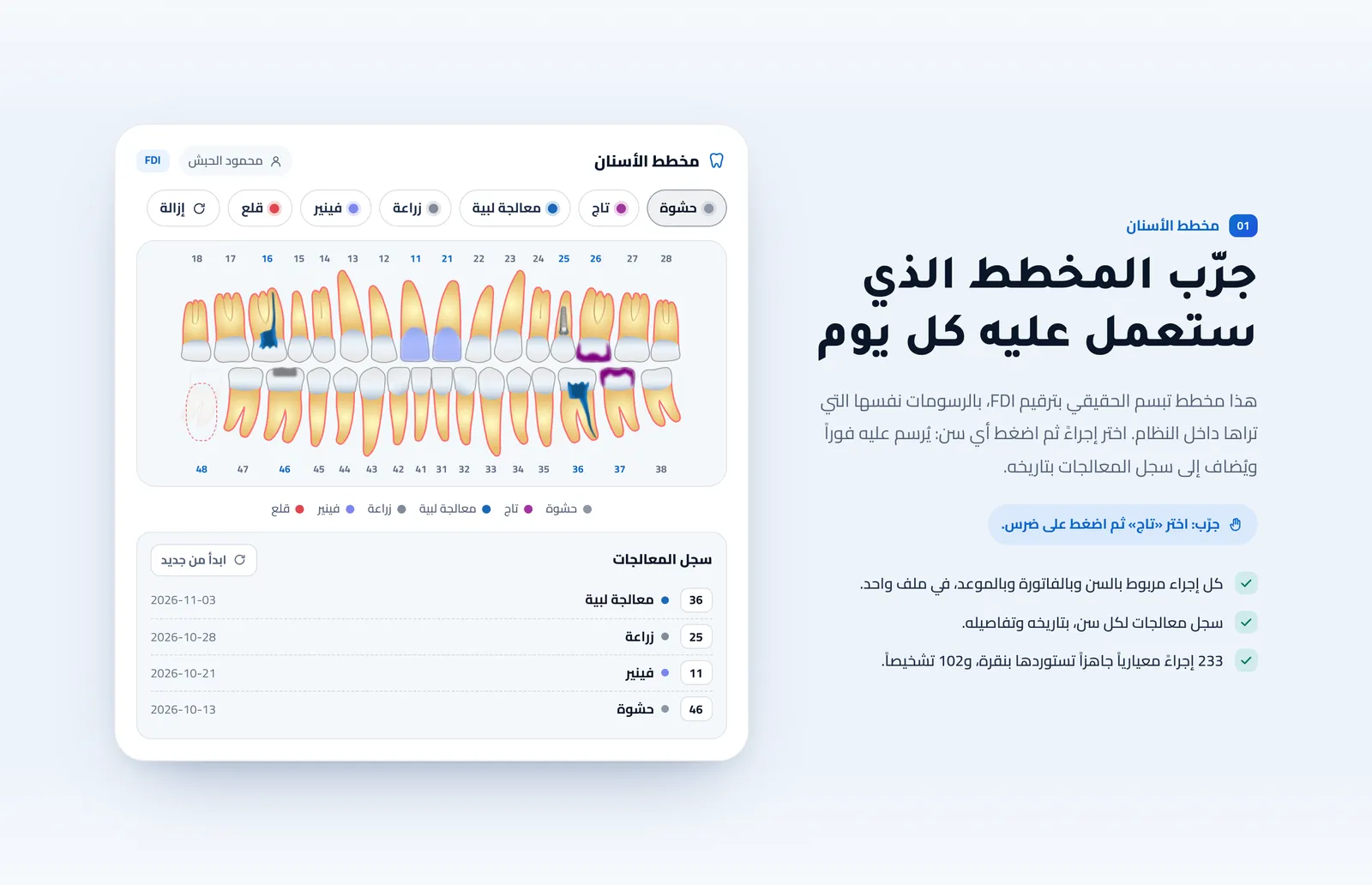
- A real dental chart with FDI numbering: choose a procedure, tap a tooth, and it's drawn on the tooth and added to the treatment history.
- Invoices and payments in the clinic's currency, at the price of the day they were saved.
- WhatsApp reminders ready to send from the clinic's own number.
- Lab orders, stock, reports and team permissions, so the front desk, the dentists and the accountant each see what they need.
There's a web app for the clinic and a Flutter app for phones, and nothing to install on a clinic computer.
Built to be trusted
A clinic's data is its patients' data, so I treated reliability as a feature: the system runs on its own server, with written runbooks for backups, restores and disaster recovery, and clear rules about who sees what.
Where it stands
Tabsem is live at tabsem.com, free for clinics with up to 100 patients. I also built its marketing engine, Tabsem Studio, which plans and drafts its social posts.